OpenSwarm: Coordinated Smart Devices for a Sustainable Future
OpenSwarm, an EU-funded project coordinated by Inria, successfully developed a new open-source approach for enabling large groups of small, low-power wireless connected devices to work together intelligently.
The objective of the project – whose full name is “Orchestration and Programming ENergy-aware and collaborative Swarms With AI-powered Reliable Methods” – was to improve how these devices communicate and collaborate, while making it easier to programme and manage them within large-scale “swarm” systems, in an energy-efficient way. OpenSwarm ran from January 1st 2023 to April 30th 2026 and focused on three pillars: efficient networking and management of smart nodes, collaborative energy-aware Artificial Intelligence (AI), and energy-aware swarm programming.
Results truly open for reuse
All the new technologies developed by partners have been integrated into the OpenSwarm “package”, an open-source architecture underpinning all swarm capabilities and enablers, including software (libraries, platforms, code used for papers) and other documents (e.g. protocols under standardisation). Through this single reference point, project’s results can be easily re-used by researchers and developers interested in energy-aware swarms of collaborative smart nodes, serving as a basis for the next advances in this highly requested type of technologies.
Validation at scale
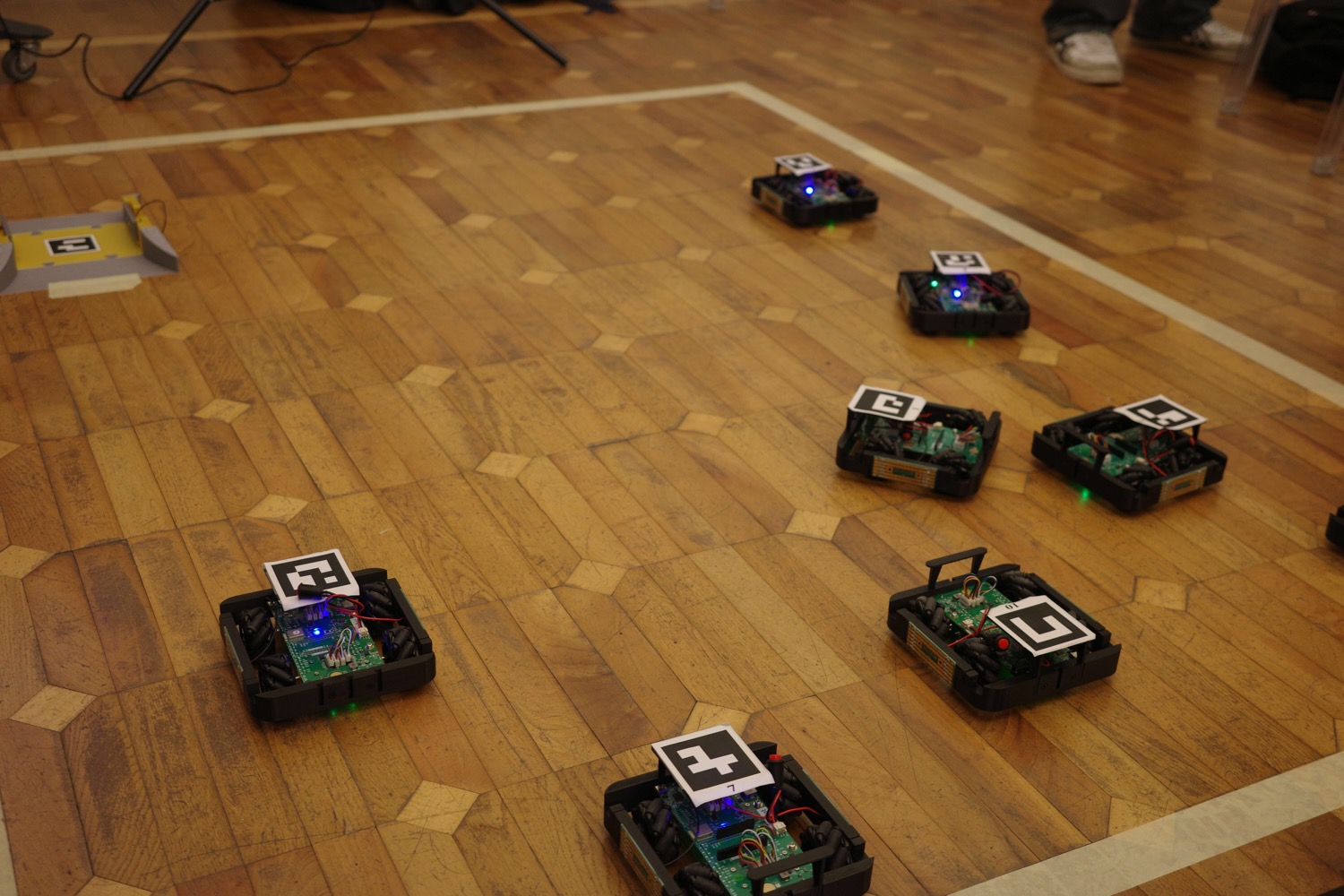
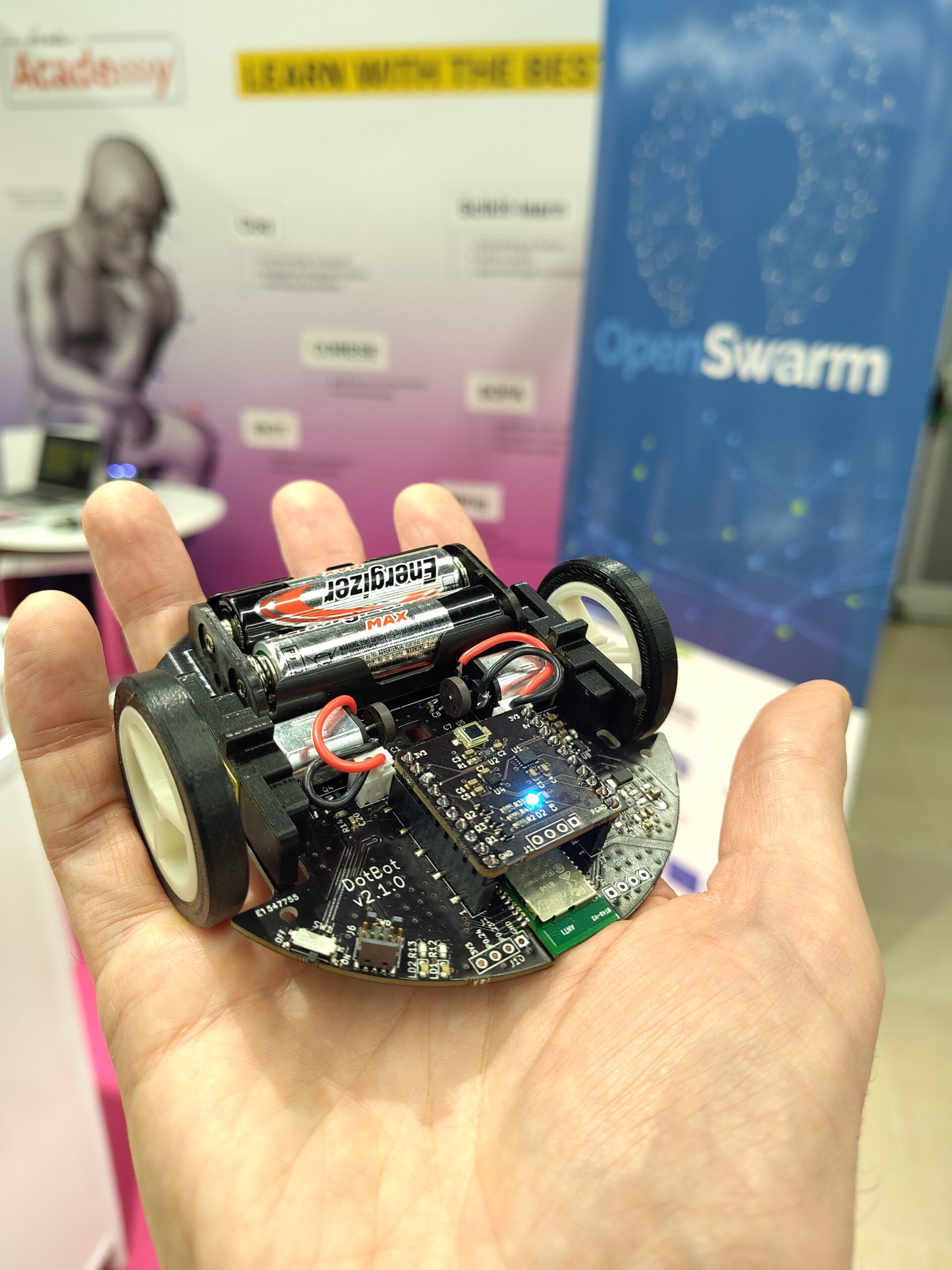
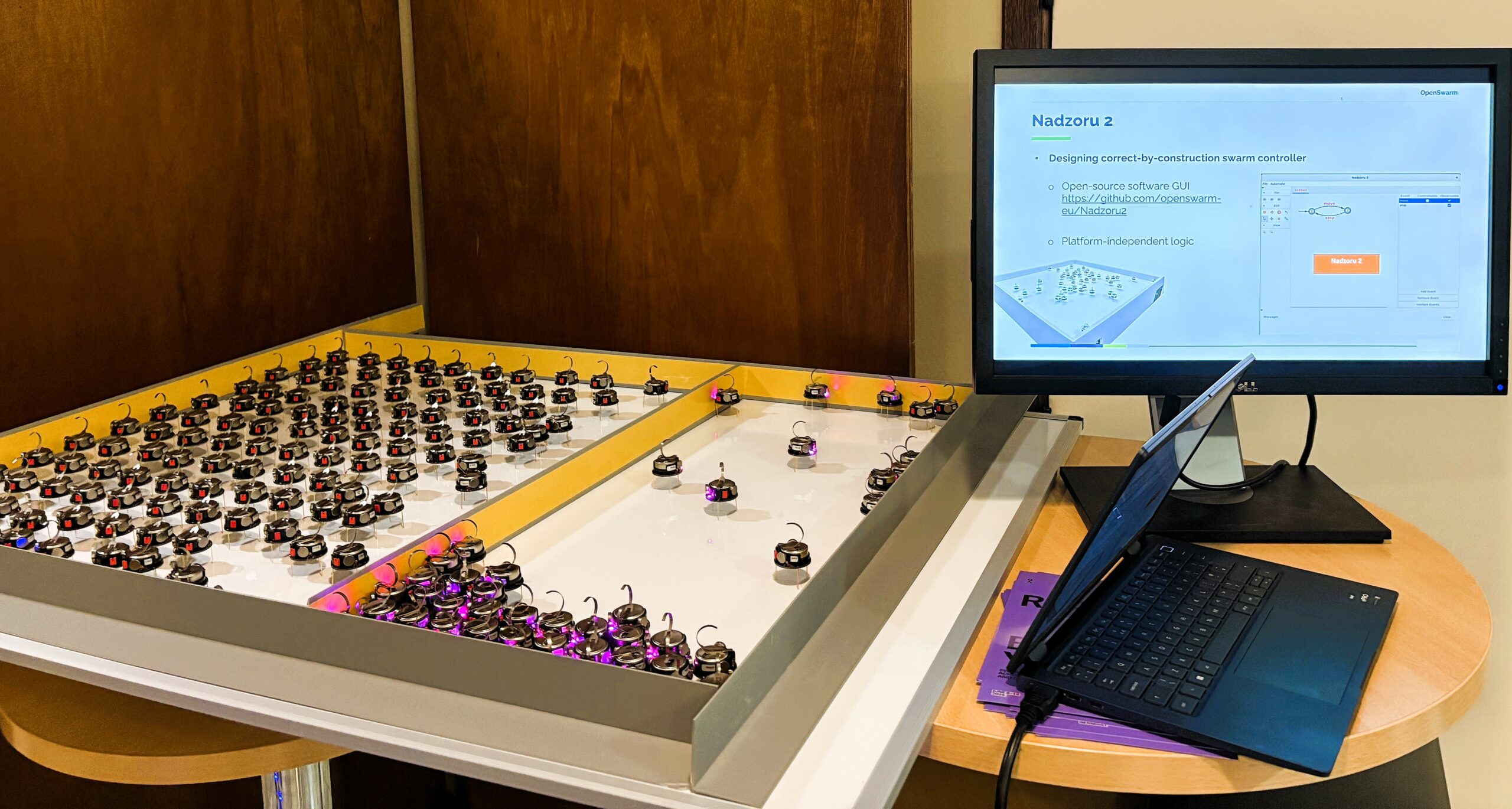
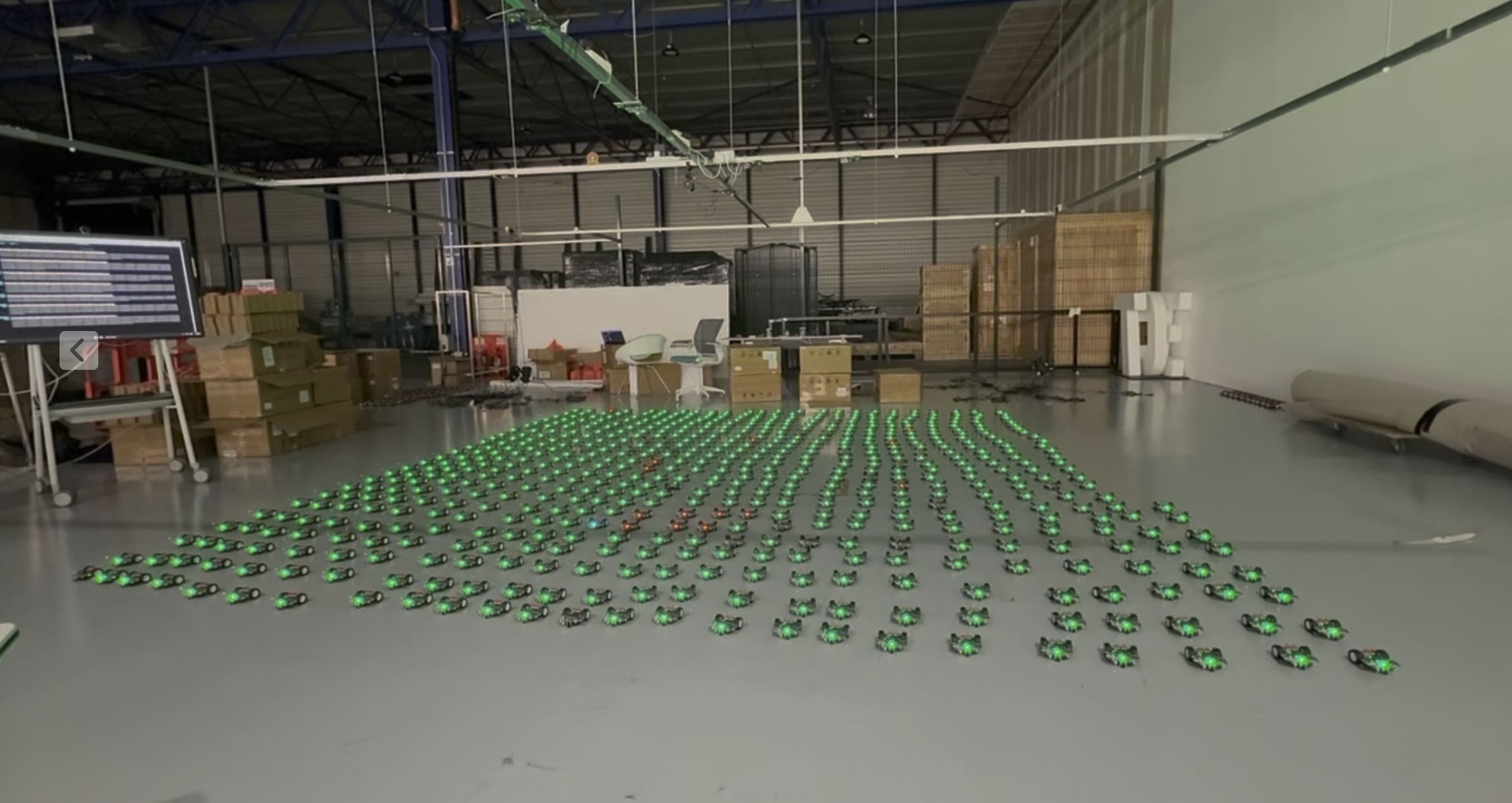
OpenSwarm technologies have also been tested at scale. At the lab level, they were validated on two testbeds: the KiloBot testbed of 900 nodes – which tested the framework’s versatility and portability, ensuring that it can function even on severely constrained robots – and the DotBot testbed of 725 nodes, which complementarily assessed key project outcomes in terms of low power networking, energy management and localisation.
Project’s results were further demonstrated in five real-world proofs of concepts (PoCs) with application in four domains:
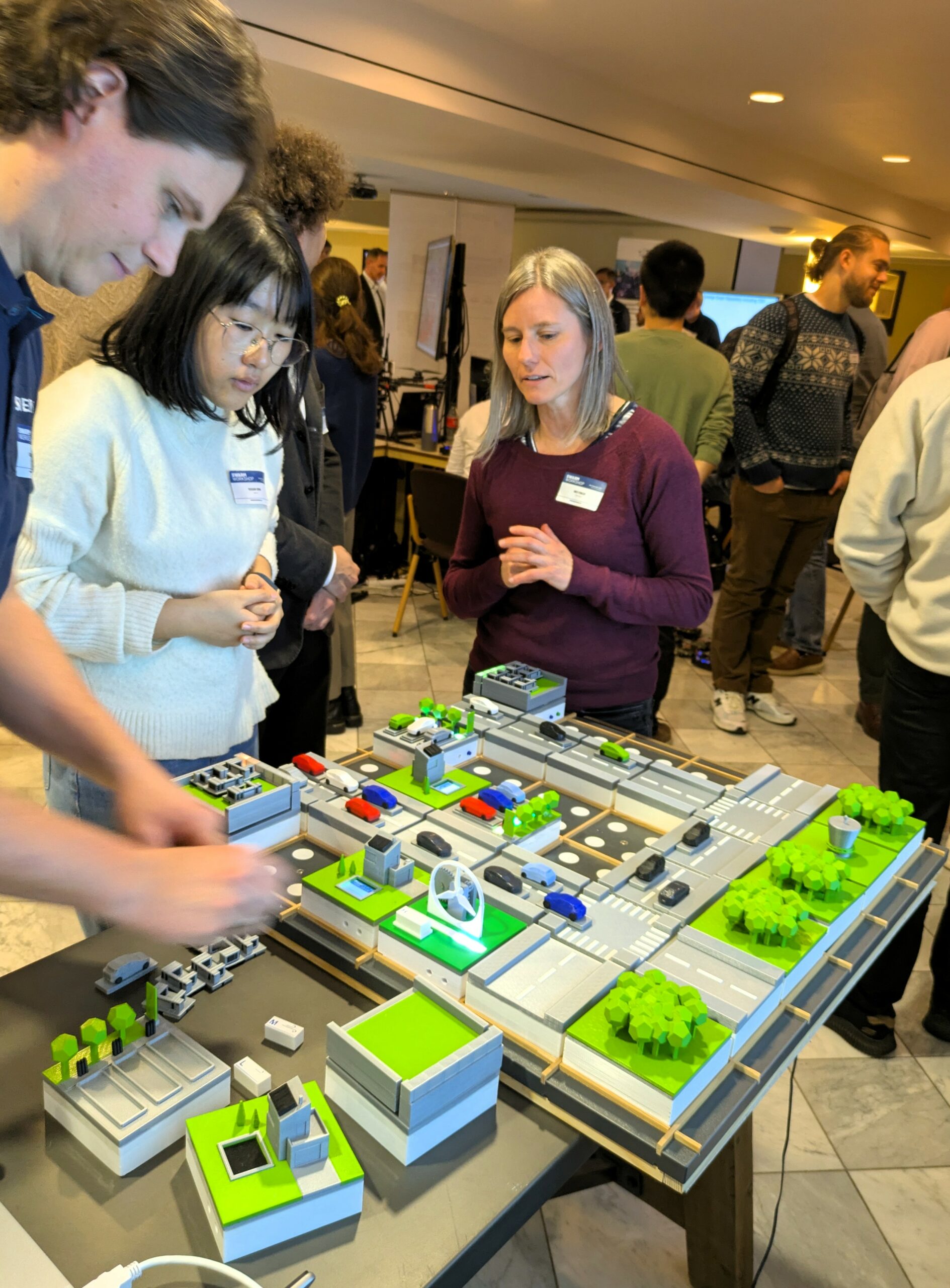
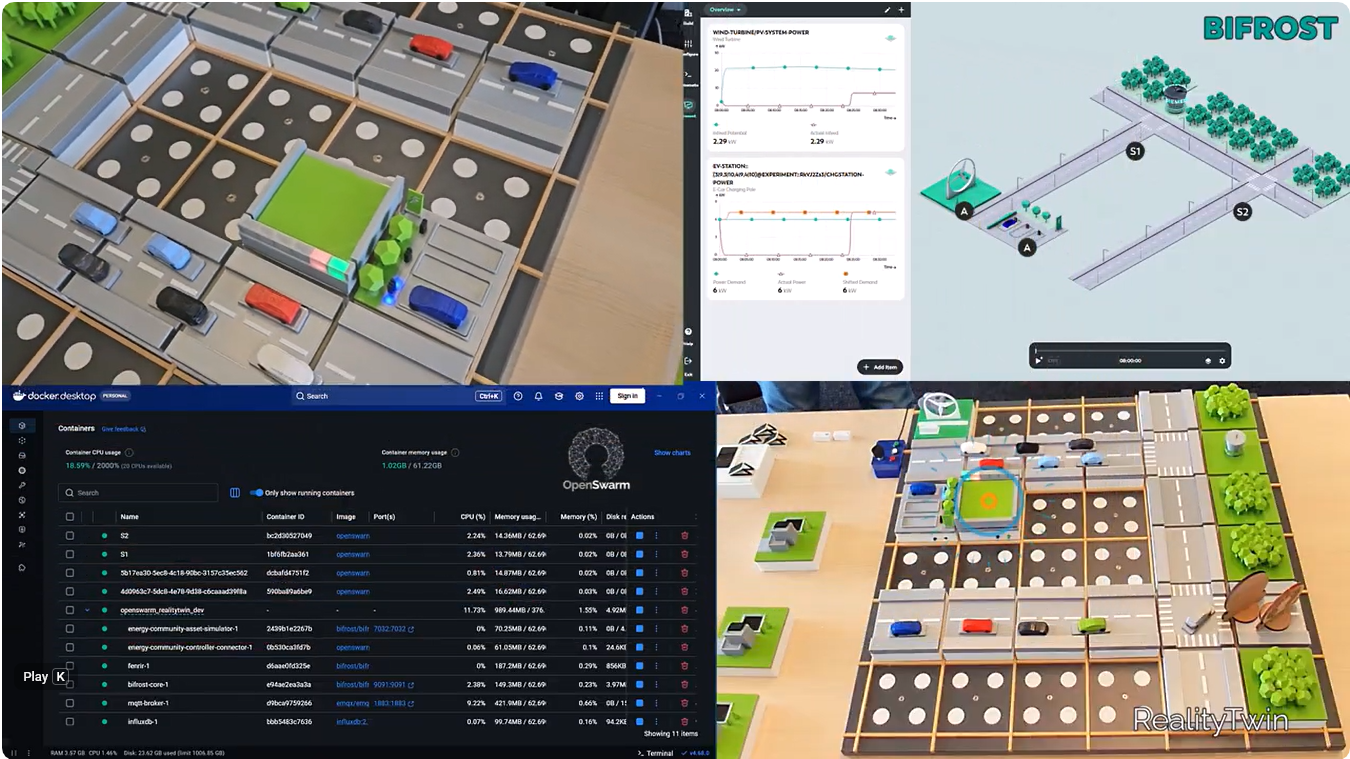
- Renewable Energy Community (Cities & Community);
- Supporting Human Workers in Harvesting (Environmental);
- Ocean Noise Pollution Monitoring (Environmental);
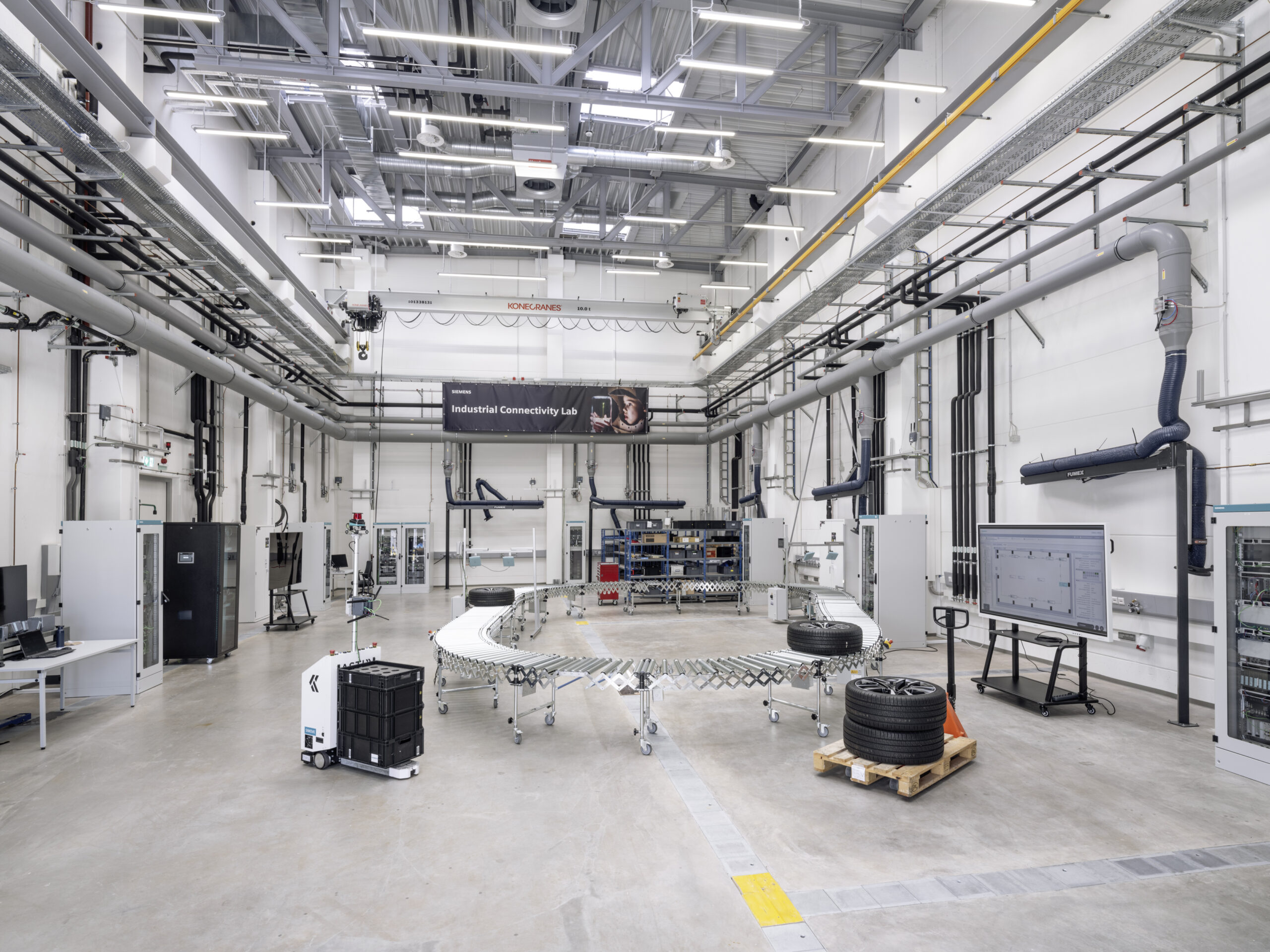
- Health and Safety in Industrial Production Sites (Industrial/Health);
- Moving Networks in Trains (Mobility);
- Validation on a 1,000 DotBot Testbed.
An overview of features and outcomes of each PoCs use case can be watched via this webpage.
“The DotBot testbed and real-world swarm deployments enabled large scale experimentation at an unprecedented node capacity, while ensuring location-aware interactivity and low-power device usage”
Filip Maksimovic (INRIA – AIO team), OpenSwarm project coordinator
Collaboration turning into impact
OpenSwarm provided the consortium with a coherent framework to manage a heterogeneous software ecosystem, while ensuring traceability across partners’ developments. As a result, initial scientific and outreach Key Performance Indicators (KPIs) were successfully achieved. Partners went even further, by defining and meeting additional self-imposed KPIs, enabling a more precise evaluation of the PoCs’ outcomes.
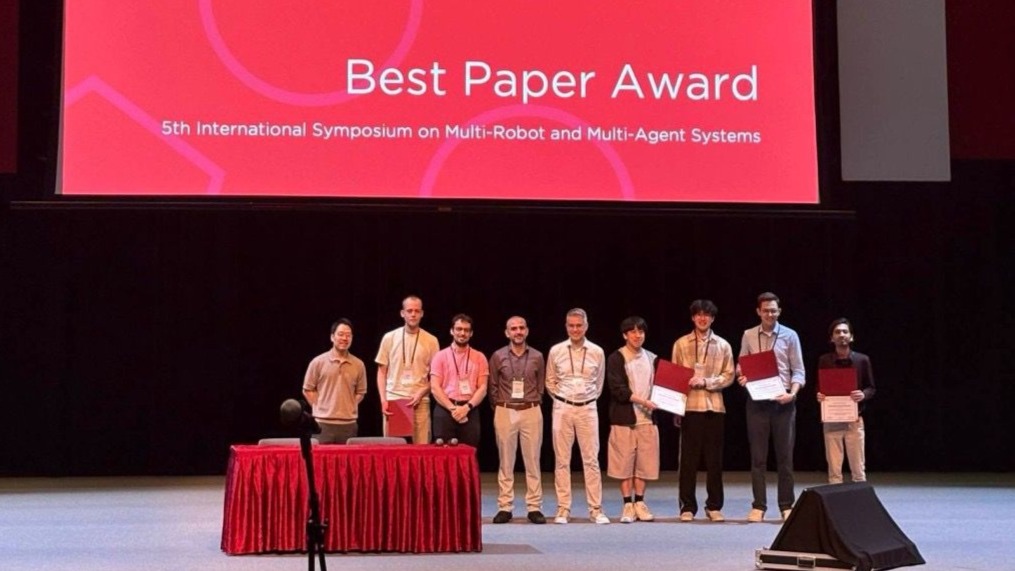
The scientific excellence of their work has been demonstrated via the publication of 22 articles in high-level open-access journals (i.e. Journal of Network and Computer Applications, Drones, Computer, IEEE Internet of Things Journal, etc.), the presentation of 62 project-related papers at the main events in the field (i.e. IROS, IPSN, CrystalFreeIoT, ICRA, IEEE SmartIoT, ANTS, etc.) and the obtention of 4 awards.
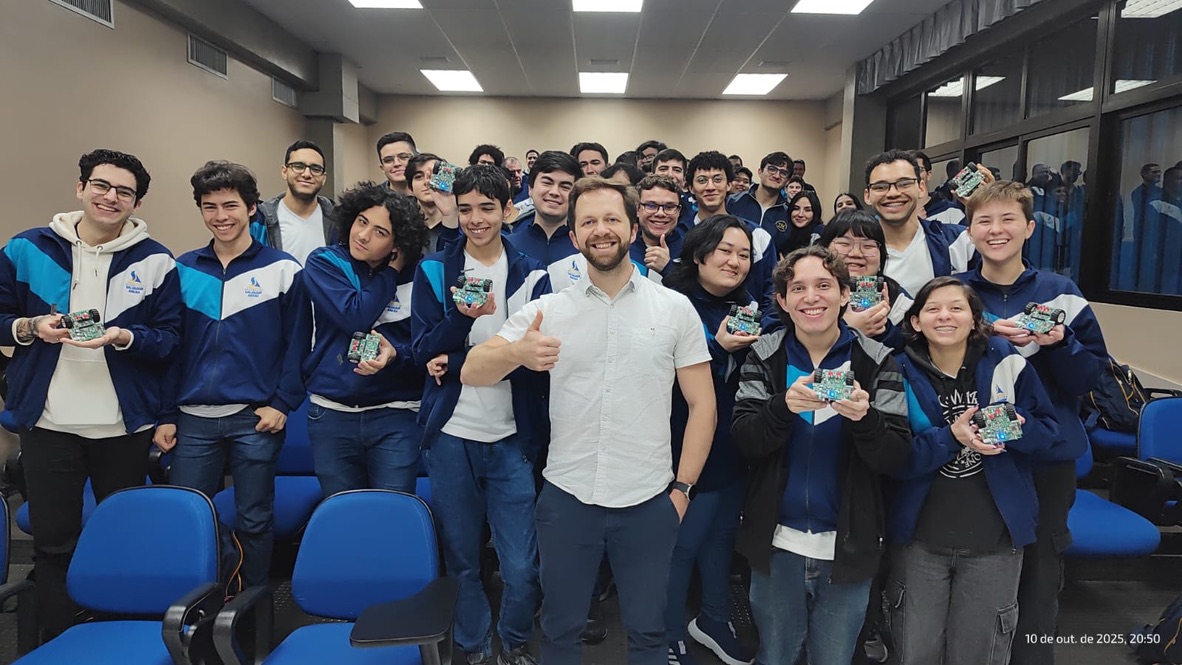
Comprehensive communication, dissemination, and exploitation efforts further amplified the legacy of OpenSwarm. Throughout the project, partners carried out a diverse range of activities related to standardisation, education and outreach, open science, and start-up creation, including hackathons, workshops and roadshows. For instance, the consortium convinced four universities to use the OpenSwarm framework in their curriculum and co-organised the Swarm Workshop with other projects from the same cluster (funded via the call HORIZON-CL4-2022-DATA-01-03).
An unmatched team of experts
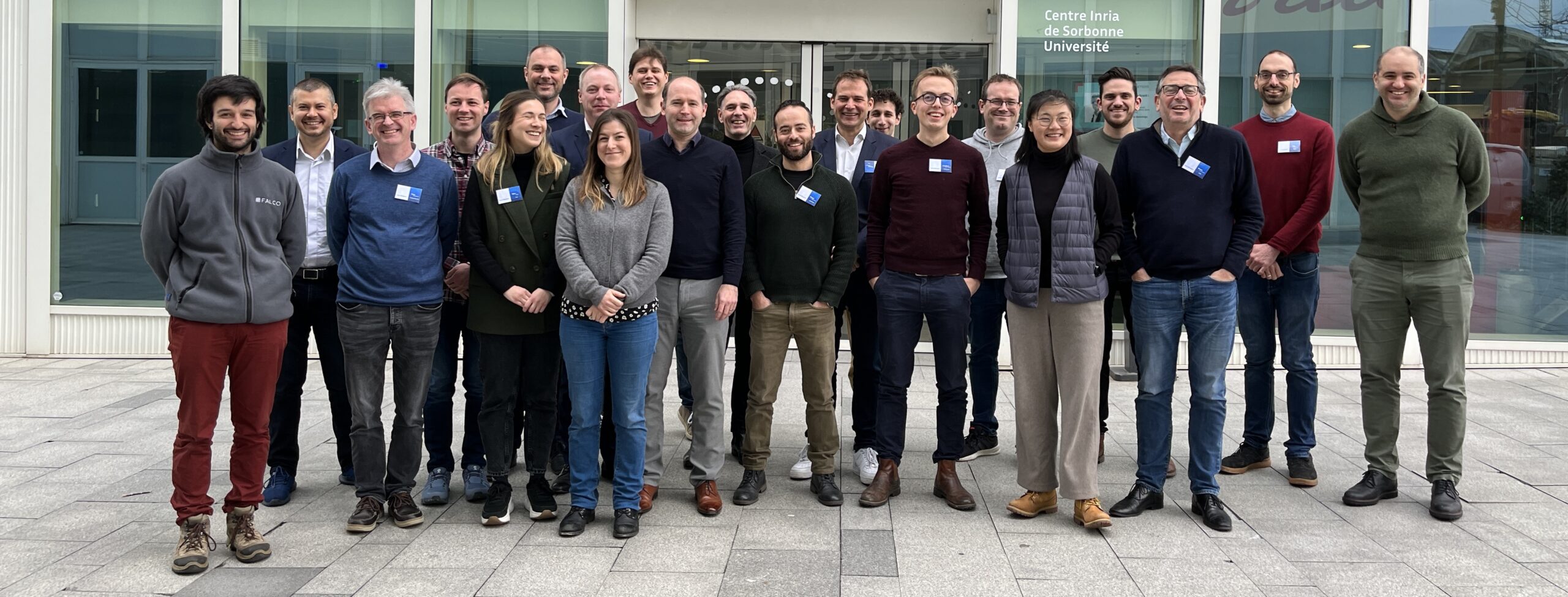
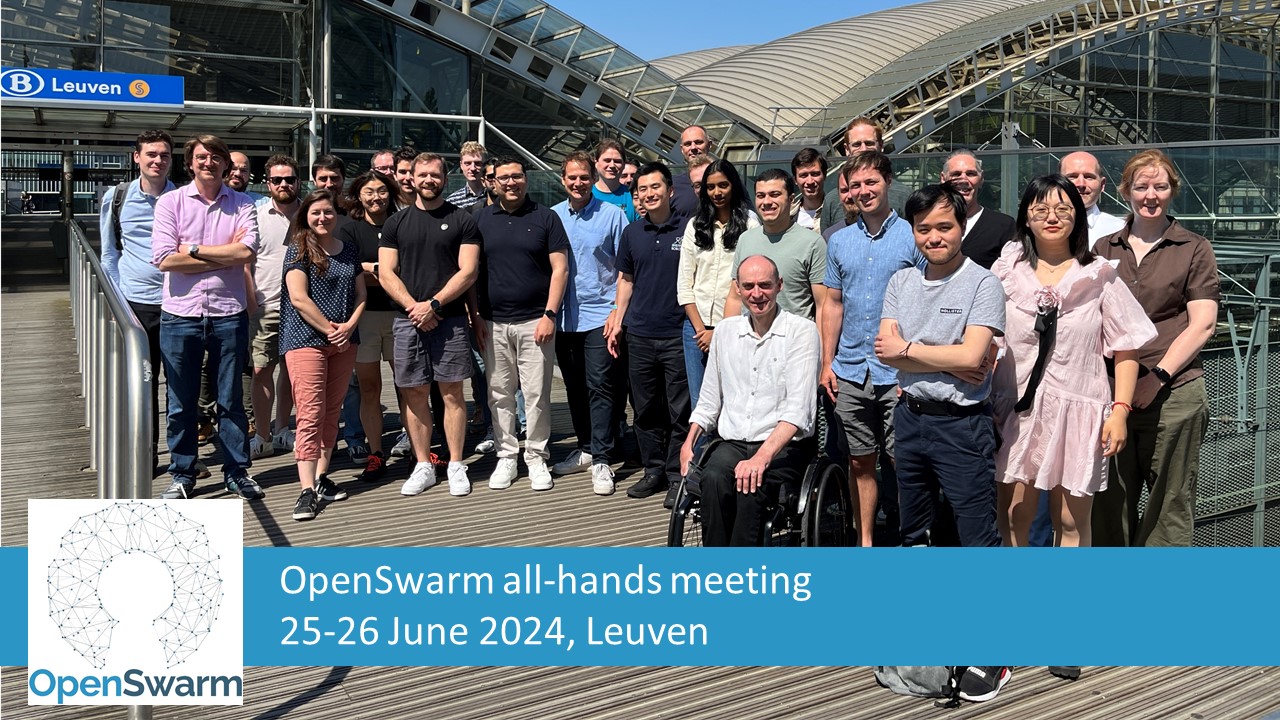
The project’s high-level consortium included ten partners from Austria, Belgium, France, Germany, Ireland, Portugal and the UK (see openswarm.eu/partners), with considerable expertise in swarm robotics, IoT, low-power wireless communications, nanoelectronics and global internet standards.
Inria, IMEC, KU Leuven, Univ. of Sheffield are leaders in their respective fields: Inria (OpenSwarm coordinator and leader for the DotBot testbed validation) in secure low-power wireless technologies, IMEC in constrained AI and energy-aware design, KU Leuven in low-latency communication, and the Univ. of Sheffield in swarm robotics. Analog Devices (ADI) and Siemens are market leaders: ADI commercializes SmartMesh, an advanced low-power wireless mesh networking technology for industrial applications, and Siemens is a global company focused on electrification, automation, and digitalisation. Ingeniarius is an award-winning SME applying novel technologies to environmental protection application.
The way ahead for smart nodes
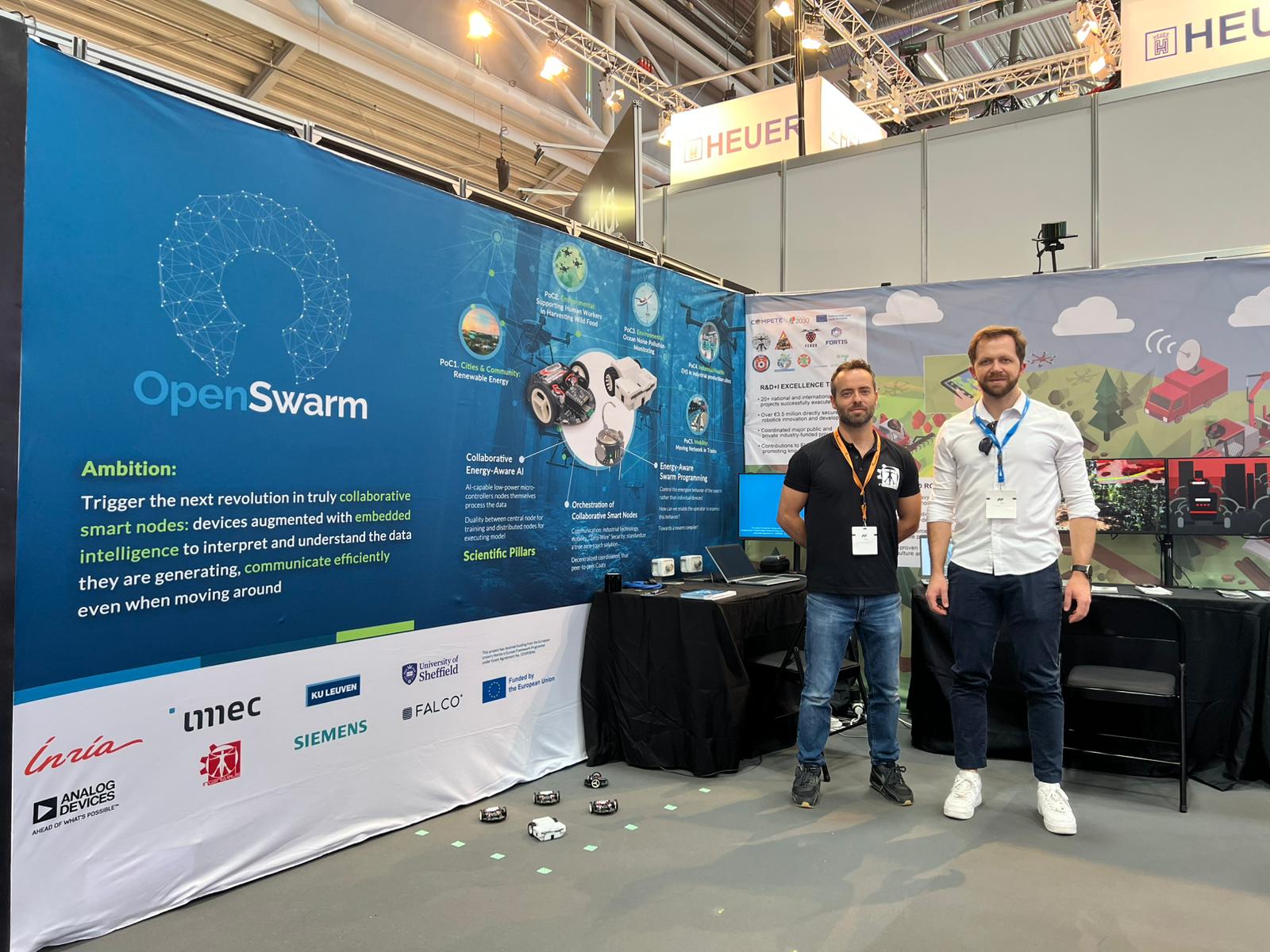
The next revolution in this field consists in obtaining truly collaborative smart nodes, in which devices are augmented with intelligence to interpret and understand the data they are generating and collaborate in a decentralized manner to keep communicating efficiently, even when moving around.
OpenSwarm intelligent nodes effectively create energy-efficient, data-centric and trustworthy distributed systems. The project’s outstanding results show that coordinated smart devices can significantly improve efficiency and sustainability in key sectors, supporting European priorities such as the Green Deal, clean energy transition, and digital transformation.